
Expert Picks For Deck Liftings Equipment To Simplify Your Renovation
Discover the most reliable and effective deck lifting solutions that make leveling and adjusting your deck effortless and efficient.
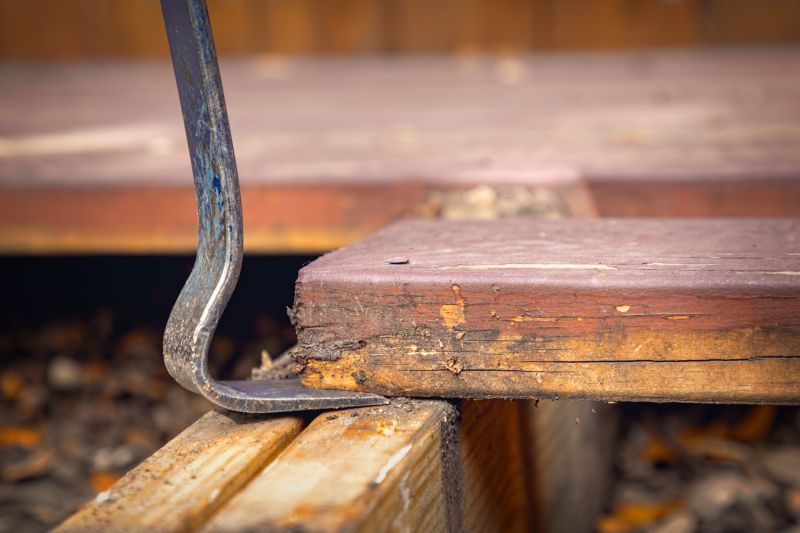 Deck lifting products are essential tools for homeowners, contractors, and hobbyists involved in the installation, maintenance, or repair of elevated outdoor structures. These products facilitate the safe and efficient raising of decks, ensuring proper alignment and stability during construction or renovation projects. They come in a variety of forms, including hydraulic jacks, screw jacks, adjustable supports, and specialized lifting systems, each suited for different deck sizes and weight capacities. Proper selection and use of these tools can significantly reduce manual effort and improve safety on the job site.
Top Overall Option
Adjustable Hydraulic Deck Lifter
An adjustable hydraulic deck lifter offers versatile and reliable lifting capabilities for a range of deck sizes and weights. Its hydraulic mechanism provides smooth operation and precise control, making it suitable for both professional and DIY projects. Equipped with a sturdy base and safety locks, it ensures stability during lifting tasks, reducing the risk of accidents. This type of lifter is valued for its adaptability and ease of use, making it a popular choice for various deck lifting applications.
Types of Products For Deck Liftings
Hydraulic Jacks
Hydraulic jacks are commonly used for lifting decks due to their high load capacity and smooth operation. They are ideal for precise adjustments and can handle substantial weights with ease.
Screw Jacks
Screw jacks operate via a threaded screw mechanism, allowing for incremental height adjustments. They are often used for smaller decks or detailed leveling tasks.
Adjustable Support Posts
These support posts are adjustable in height and provide stable support during deck lifting or leveling. They are easy to install and remove as needed.
Lift Systems with Casters
Portable lift systems equipped with casters facilitate mobility and quick repositioning during deck projects, especially in larger outdoor spaces.
Scissor Lifts
Scissor lifts provide stable vertical lifting and are suitable for medium to large decks requiring substantial height adjustments.
Hydraulic Bottle Jacks
Compact and powerful, hydraulic bottle jacks are useful for lifting specific sections of a deck with high precision.
Telescoping Support Columns
These columns extend telescopically to provide adjustable height support, ideal for uneven terrain or complex deck structures.
Manual Lifting Poles
Manual lifting poles are simple tools for small adjustments and are often used in conjunction with other lifting devices.
Hydraulic Ram Lifts
Hydraulic ram lifts are specialized for lifting heavy sections of decks with controlled force and stability.
Portable Jack Stands
Jack stands provide temporary support during lifting and construction, ensuring safety and stability.
Adjustable Beam Supports
These supports are designed to hold beams in place during lifting or leveling operations, offering adjustable height features.
Hydraulic Lift Tables
Lift tables with hydraulic operation can be used for raising large sections or entire decks for maintenance or installation.
Popular Choices
A hydraulic deck lifter provides controlled lifting for various deck sizes and is favored for its ease of operation.
Support jacks that are adjustable in height are commonly used for leveling and stabilizing decks during construction.
Portable lift systems with wheels allow for flexible positioning and are popular for DIY projects and professional use.
Screw jack supports are easy to adjust and are often used for small to medium deck lifting tasks.
Hydraulic ram support devices are appreciated for their high load capacity and precise control.
These supports are versatile and can be customized to various heights, making them popular in deck projects.
Combo systems that combine lifting and support features streamline deck raising and stabilization tasks.
Manual poles are lightweight and easy to handle, suited for small adjustments or temporary support.
Compact and powerful, these jacks are favored for their strength and portability in deck projects.
Scissor lifts are appreciated for their stability and ability to handle larger deck sections.
Adjustable telescoping columns are popular for uneven terrains and complex lifting needs.
Support beams that can be adjusted in height are frequently used during deck framing and lifting.
When choosing deck lifting products, it is important to consider the weight and size of the deck, as well as the height adjustments needed. Many products are designed to accommodate specific load ranges, so matching the tool's capacity with the project's requirements is crucial. Additionally, ease of use, portability, and durability are key factors that influence the effectiveness of a deck lifting solution. Some systems offer quick setup features, while others provide fine-tuned control for precise adjustments.
Safety features should also be a priority. Look for products that include secure locking mechanisms, stable bases, and clear instructions to prevent accidents during lifting operations. Regular maintenance and inspection of the equipment can help ensure longevity and safe operation over time. Whether performing small lifts or major structural adjustments, selecting the right deck lifting product can streamline your project and contribute to a safer working environment.
In summary, a well-chosen deck lifting product can be a valuable addition to any toolkit involved in outdoor structure projects. By understanding the different types available and considering the specific needs of your project, you can make informed decisions that enhance safety, efficiency, and results.
Key Buying Considerations
- Determine the weight capacity needed for your specific deck project to ensure safety and effectiveness.
- Consider the maximum lifting height required to accommodate your deck's dimensions and construction needs.
- Evaluate the ease of operation, especially if you prefer manual versus hydraulic or powered systems.
- Check for stability features such as wide bases, locking mechanisms, and anti-slip surfaces.
- Assess the portability and storage options, particularly if you need to move the equipment frequently or store it compactly.
- Review the durability and build quality, ensuring materials are suited for outdoor use and heavy loads.
- Look for adjustable features that allow for precise control and customization to different deck configurations.
- Verify safety features including secure locking, stability during operation, and clear instructions for use.
- Consider compatibility with other tools or supports you might already have on hand.
- Evaluate the maintenance requirements and availability of replacement parts to ensure long-term usability.
- Review user feedback and ratings to gain insights into the real-world performance of the product.
- Determine whether the product is suitable for DIY use or requires professional installation.
- Check for additional accessories or support systems that can enhance functionality or safety.
- Factor in your budget, balancing cost with features and quality to find the best value.